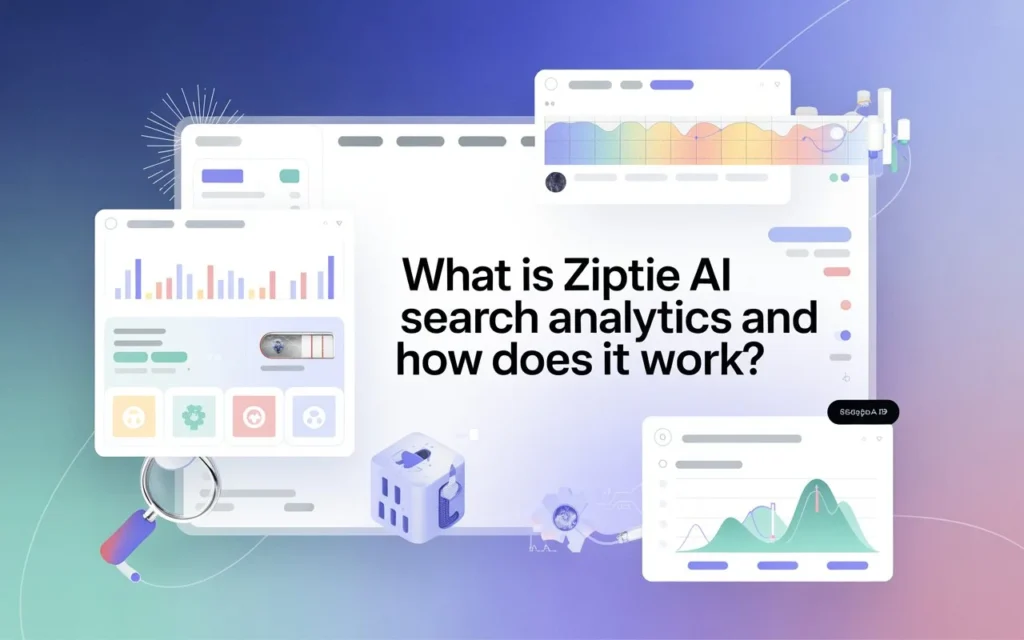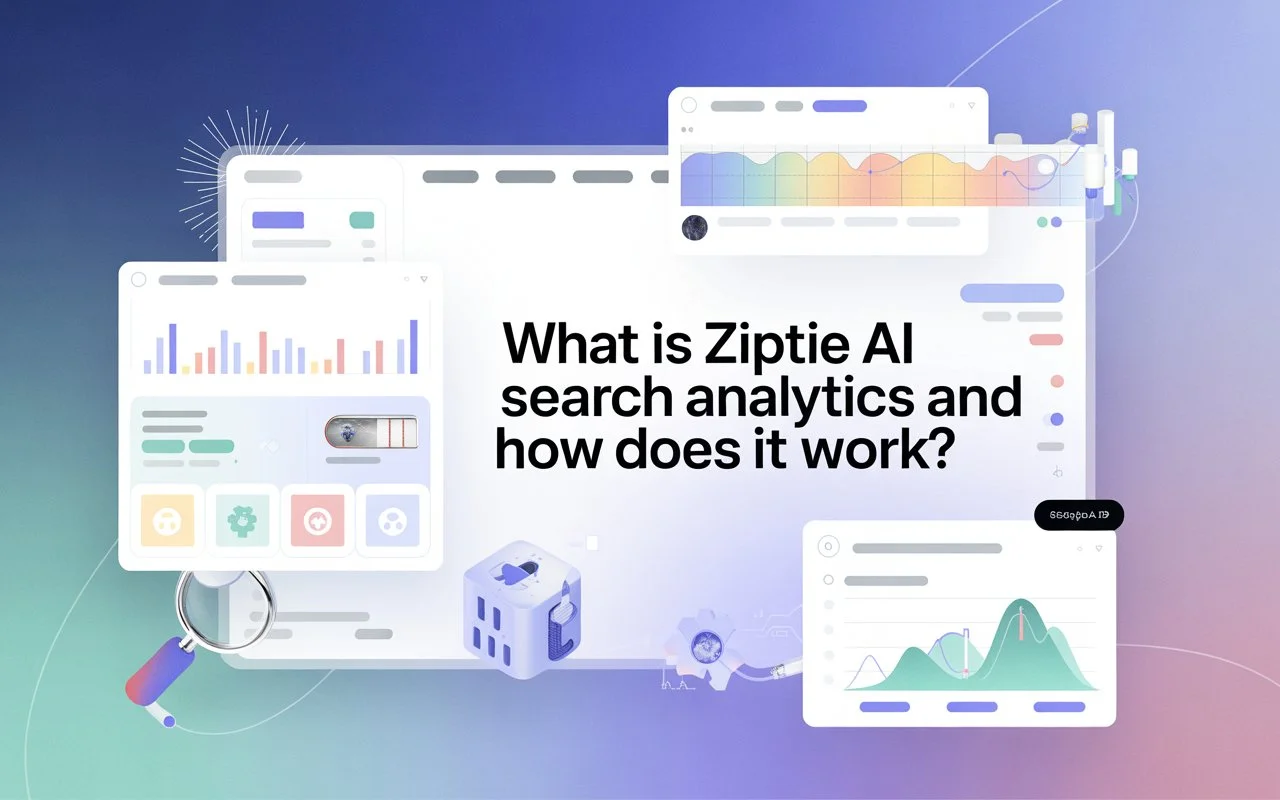
This AI-powered platform is revolutionizing how businesses understand user search behavior, solve search problems, and optimize queries to improve conversions.
How Does ZipTie AI Search Analytics Work to Solve AI Search Problems?
ZipTie AI Search Analytics works by analyzing search data from your site, app, or internal platform to uncover patterns in user queries, detect friction points, and improve search relevance.
At its core, the platform leverages machine learning search models and natural language processing (NLP) to understand what is searched in AI terms of intent, not just keywords. This allows businesses to detect AI search problems like high bounce rates, zero click searches, and poor content discoverability.
It uses tools such as query clustering, semantic search, and entity recognition to categorize queries and refine results automatically. This ensures your analytics platform converts search logs into actionable AI-driven insights.
What Are the Main Features of ZipTie AI Search Analytics?
Query Analysis and Intent Detection
ZipTie AI identifies whether a query is informational, navigational, or transactional, allowing you to serve accurate results and personalized recommendations.
Trend Analysis and Search Optimization
The platform tracks search trends, monitors search volume, and highlights spikes in queries, helping you capitalize on opportunities in real-time.
Gap Analysis for Missing Content
By surfacing searches that yield no results, ZipTie helps address content gaps, refine product taxonomy, and reduce search friction.
Behavioral Analytics
Measure click-through rate (CTR), bounce rate, and conversion tracking to understand post-search user actions and optimize for higher engagement.
Semantic Search and NLP Capabilities
Tools like topic modeling, embedding models, and transformer models (BERT, GPT) allow ZipTie to interpret typos, synonyms, and conversational queries accurately.
Why Should Businesses Use ZipTie AI Search Analytics?
What Is ZipTie AI Search Analytics? Businesses rely on search to drive engagement, conversions, and satisfaction. ZipTie AI turns passive search data into strategic insights.
- Boost Conversion Rates: Reduce zero-result searches and improve search relevance.
- Improve User Experience (UX): Understand search behavior and refine interfaces for mobile, desktop, and voice search.
- Optimize SEO and Content: Insights from query patterns, keyword tracking, and trend analysis guide content creation and on-page SEO strategies.
- Increase ROI: Track metrics such as search ROI, cost per query, and LTV search to measure performance and drive smarter investment.
- Industries like real estate and finance are increasingly adopting AI-driven analytics to optimize digital decision-making.

How Does ZipTie AI Analyze Search in AI Terms?
What Is ZipTie AI Search Analytics? Understanding what search in AI involves is more than just counting keywords. ZipTie AI applies advanced analytics like vector search, embedding models, and generative AI search to interpret intent, detect anomalies, and predict user behavior.
By analyzing AI network traffic analysis and search logs, ZipTie can identify patterns across site search, internal search, e-commerce search, and SaaS platforms, giving you a complete picture of how users interact with your content and products. Advanced AI integrations and API-based setups can further enhance monitoring capabilities using conversational AI platforms.
What Are Common AI Search Problems That ZipTie Solves?
Businesses often face challenges like:
- Zero-Click Searches: Users search but find no relevant results.
- Ambiguous Queries: Multiple terms for the same product confuse traditional search engines.
- High Bounce Rates: Poor search relevance leads users to leave without converting.
- Inefficient Knowledge Bases: Internal searches fail to surface important documentation or product info.
ZipTie AI addresses these by combining semantic search, query refinement, synonym expansion, and machine learning search models, helping organizations reduce friction and improve search metrics.

How Can ZipTie AI Search Analytics Improve SEO and Search Engine Optimization?
Integrating ai search analytics with SEO strategies provides actionable benefits: Businesses that want to monitor visibility across AI platforms should also learn how to track brand mentions in AI search to measure their AI share of voice.
- Identify long-tail keywords and queries for content optimization.
- Conduct gap analysis to find missing content opportunities.
- Track search trends for better programmatic SEO campaigns.
- Optimize site search and internal search to improve engagement and conversions.
Using tools like analytics dashboards, reporting dashboards, and automated insights, marketers can make data-driven decisions without guesswork.
How Does ZipTie AI Use AI Network Traffic Analysis and Real-Time Analytics?
AI network traffic analysis complements search analytics by revealing user paths, session data, and query interactions. ZipTie tracks how queries flow through your platform, identifies friction points, and highlights opportunities for optimization in real time.
With real-time analytics, predictive analytics, and anomaly detection, businesses can:
- Adjust search rankings dynamically.
- Improve personalized search results.
- Reduce bounce rates and increase click-through rates (CTR analytics).
What Is Search Space in AI, and Why Does It Matter for ZipTie?
The search space in AI refers to all possible states or queries that the AI can evaluate to find an optimal solution. In the context of ZipTie, understanding search space in AI helps the platform:
- Efficiently interpret complex user queries.
- Map related user intent across synonyms and semantic meanings.
- Improve search ranking and recommendation engine outputs.
Effectively, it ensures that every query reaches the most relevant results, enhancing UX and conversion performance.
How Can Businesses Get Started with ZipTie AI Search Analytics?
- Integrate with Existing Platforms: Connect ZipTie to your site search, e-commerce platform, or internal tools.
- Set KPIs and Metrics: Define search performance indicators, CTR goals, and conversion targets.
- Analyze Data: Use query logs, click logs, and session data to identify issues.
- Optimize Content and Search: Update product labels, content vocabulary, and internal knowledge bases.
- Monitor Continuously: Use real-time analytics, automated insights, and alert systems to stay ahead.
Conclusion
For businesses wondering what is Zip Tie AI Search Analytics, it is more than just an analytics platform it’s a strategic tool designed to improve engagement, sales, and internal efficiency.
By understanding what is ziptie AI search analytics is, addressing AI search problems, optimizing search behavior, and leveraging AI-powered search intelligence, organizations can achieve higher conversions, improved UX, and better ROI.
Ready to transform your search experience? Explore ZipTie AI Search Analytics today and turn your user queries into actionable business growth.
FAQs
What is ZipTie AI Search Analytics?
ZipTie AI is an AI-powered platform that analyzes search queries to reveal user intent, optimize results, and improve conversions.
How does ZipTie AI solve AI search problems?
It detects zero-click searches, ambiguous queries, and high bounce rates using NLP, semantic search, and machine learning models.
What are the main features of ZipTie AI Search Analytics?
Key features include query analysis, intent detection, trend spotting, gap analysis, behavioral metrics, and NLP-powered semantic search.
How does ZipTie AI improve user experience (UX)?
By understanding search behavior and intent, it delivers relevant results, reduces friction, and enhances mobile, voice, and site search.
Can ZipTie AI help with SEO and content optimization?
Yes, it guides long-tail keyword targeting, gap analysis, trend tracking, and programmatic SEO improvements for better engagement.
How does ZipTie AI analyze search in AI terms?
It uses embedding models, vector search, and generative AI to interpret queries, detect anomalies, and predict user behavior.
What common AI search problems does ZipTie address?
It solves zero-result searches, ambiguous queries, inefficient internal search, and poor content discoverability.
How does ZipTie AI use network traffic analysis and real-time data?
What Is ZipTie AI Search Analytics and How Does It Work? It tracks user paths, session data, and query interactions to optimize search rankings, personalization, and CTR in real time.