Before you visit any platform you’ve only heard about secondhand, there’s one question worth asking: what are you actually risking and who bears the cost?
Every month, hundreds of thousands of people search for SimpCity most of them without knowing what they’re actually walking into. Not the content. The legal exposure, the cybersecurity traps, the human cost.
This guide covers all of it. Whether you’re curious, a researcher, a creator checking for stolen content, or a professional needing accurate information — this is the most complete breakdown available.
What Is SimpCity?
SimpCity is an online forum that gained widespread notoriety for distributing content from subscription-based creator platforms — primarily OnlyFans — without the creators’ knowledge or consent.
Legal experts classify it as a Non-Consensual Intimate Image (NCII) distribution platform: a site that hosts or aggregates intimate content shared without the consent of the individuals depicted, even when that content was originally created voluntarily by the creator.
A creator choosing to share content with paying subscribers on a closed platform is not consenting to that content being redistributed freely, permanently, and without limit across unmoderated third-party forums. Consent in the original context does not transfer to all future contexts.
The name is a deliberate play on “simp” — internet slang from the early 2010s, typically applied to someone perceived as overly devoted to or financially generous toward a content creator online. SimpCity co-opted the term ironically, positioning itself as a space to access creator content without financially supporting the creators. The contradiction at the center of that framing is worth sitting with.
SimpCity is not affiliated with OnlyFans, Fansly, Patreon, or any legitimate creator platform. It operates across rotating domains following repeated DMCA enforcement actions and hosting terminations.
Who Is Actually Searching for SimpCity?
Search intent analysis for this keyword reveals five distinct user groups — each with a legitimate need for accurate, well-sourced information that almost no existing content provides:
| User Type | Core Need | Currently Served? |
|---|---|---|
| Curious users | Understand what the platform is | Poorly |
| Content seekers | Access creator content | Partially |
| Content creators | Check for stolen content, get help | Almost never |
| Researchers & journalists | Document the NCII ecosystem | Poorly |
| Legal professionals | Investigate IP violations | Not at all |
This gap — where the majority of search intent goes unserved by quality informational content — is the reason this article exists. Whatever brought you here, the information below is accurate and sourced.
Is SimpCity Legal? What the 2026 Legal Landscape Actually Says
This is the section most comparable articles either skip entirely or badly understate. The legal environment around platforms like SimpCity has tightened substantially — what felt ambiguous in 2022 is increasingly defined and prosecuted in 2026.
United States: Federal and State Exposure
Under the Digital Millennium Copyright Act (DMCA), content creators hold copyright from the moment of creation. Accessing, downloading, or redistributing that work without authorization constitutes copyright infringement — regardless of where it appears online. Civil penalties can reach $150,000 per willful infringement.
Beyond copyright, a majority of U.S. states — including California, Texas, New York, Virginia, and Florida — now have non-consensual pornography statutes that create criminal liability for distributing intimate images without consent, even if the distributor did not originally obtain those images illegally.
The International Picture
| Jurisdiction | Relevant Law | Maximum Penalty | Status |
|---|---|---|---|
| United Kingdom | Online Safety Act 2023 | Up to 2 years imprisonment | Enforced |
| European Union | GDPR + DSA 2024 enforcement | Significant civil fines | Active |
| Canada | Bill C-13 (Criminal Code) | Up to 5 years imprisonment | Enforced |
| Australia | Online Safety Act 2021 | Civil penalties + removal orders | Expanding |
| USA (federal) | DMCA + State NCII laws | Up to $150,000 civil / criminal | Active |
In most jurisdictions, passive browsing without downloading does not constitute a criminal act. However, downloading content (even temporarily), sharing or linking to NCII content, and creating accounts on NCII platforms all increase legal exposure in ways most users don’t anticipate.
The Cybersecurity Reality: What SimpCity Users Actually Risk
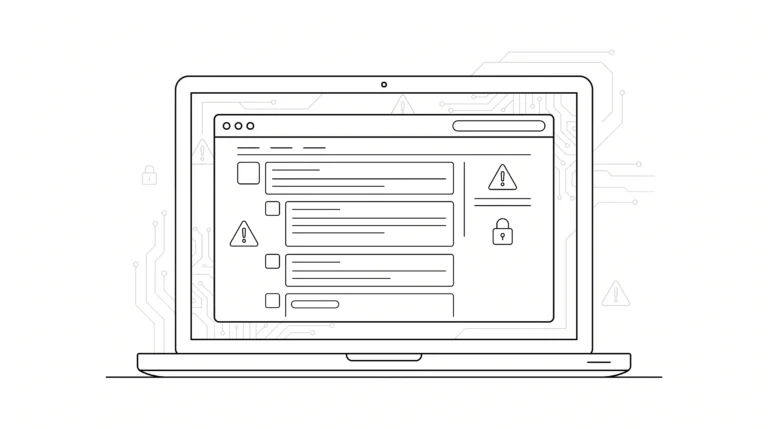
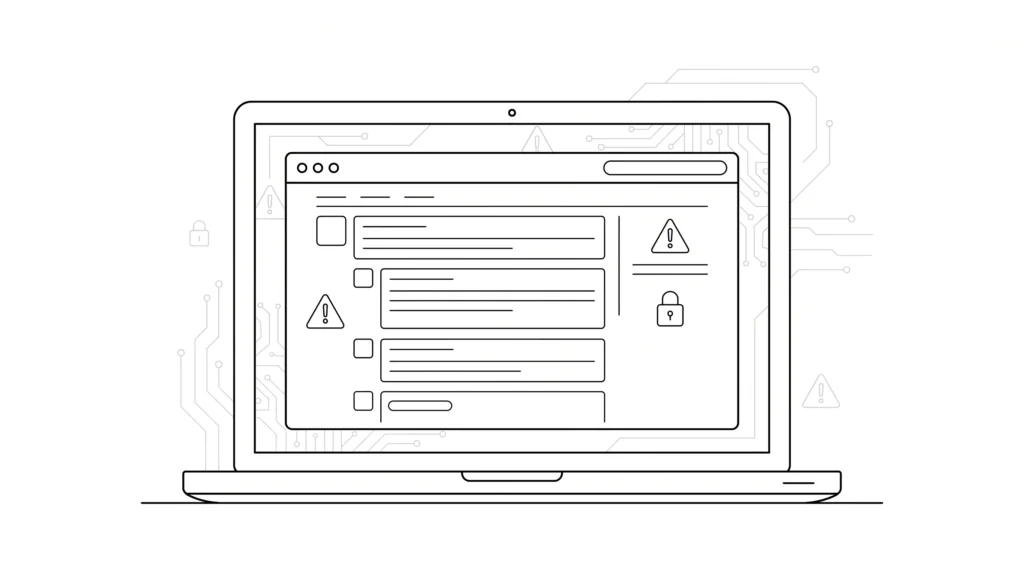
This is the angle virtually no competitor article covers — and it may be the most immediately practical concern for most readers. The content on platforms like SimpCity isn’t the only thing being distributed. So is malware. And so is your data.
Malicious Ad Delivery
Piracy-category sites deliver malicious advertising at significantly elevated rates, enabling drive-by malware installation without any clicks required.
Credential Harvesting
Fake login pages and forum registration flows are documented attack vectors on unmoderated content forums. Your email and password may be recorded on sign-up.
Browser Fingerprinting
Even with a VPN active, browser fingerprinting enables third-party trackers to identify and profile individual users across multiple sessions.
Data Breach Exposure
Forum account databases — including usernames, emails, and IP logs — have been repeatedly breached and sold on dark web markets, exposing users to third parties.
Subpoena Vulnerability
Law enforcement subpoenas issued to hosting providers can expose user data that bypasses VPN protections entirely by targeting the infrastructure layer.
Drive-By Downloads
Malware can install from simply visiting a compromised page — no click required — on sites with no content moderation or security review process.
Many users assume a VPN provides complete anonymity on sites like SimpCity. It does not. VPNs reduce — but do not eliminate — traceability. Browser fingerprinting, forum account data, and subpoena-accessible hosting records create multiple deanonymization pathways that operate independently of each other.
The content on platforms like SimpCity isn’t the only thing being distributed. So is malware — and so is your data.
What Happens to Content Creators: The Human Dimension
Behind every leaked image or video is a person running a business. Content creators on subscription platforms operate legitimate enterprises. When content is stolen and redistributed:
Financial Impact
Subscriber churn accelerates immediately when content becomes freely available. Creator advocacy groups document revenue drops of 30–70% following major leak events. Many creators spend months rebuilding subscriber bases — some never recover their previous income levels.
Psychological Impact
Research published in peer-reviewed journals has found that survivors of NCII distribution experience rates of PTSD, anxiety, and depression comparable to survivors of physical sexual assault. Creators describe a complete, sudden loss of control over their identity — often without warning and with no proportional recourse mechanism.
Long-Term Career Impact
Leaked content can surface in searches connected to a creator’s legal name indefinitely. The permanence of digital distribution means the harm is not time-bounded. A significant percentage of affected creators exit their industry entirely — not by choice, but because continued operation becomes untenable.
What Most Websites Get Wrong About SimpCity
Treating It as a Technical or Access Question
Most content about SimpCity focuses on domain availability or access methods. This fundamentally misframes what the platform is. SimpCity is a legal, ethical, and social phenomenon — not a technical one. Framing it as a “where do I find it” question obscures the harm model entirely and produces exactly the thin, unhelpful content that Google’s Helpful Content System down-ranks.
Ignoring the Rapidly Shifting Legal Risk Calculus
Articles published 18 months ago reflected a legal environment that has changed materially. The 2024–2025 legislative cycle produced more NCII-specific legislation globally than any equivalent prior period. What was legally ambiguous in 2022 may carry clear criminal liability in 2026.
Missing the Cybersecurity Dimension
Forum-based content distribution sites represent a genuine, documented cybersecurity risk. Its near-total absence from existing SimpCity content leaves users without information directly relevant to their device and data security.
Failing Content Creators Entirely
A meaningful percentage of people searching “simpcity” are creators checking whether their work has been stolen, or seeking resources to address it. Nearly zero existing content serves this need — a significant ethical and content gap.
What Happened to SimpCity? Domain Changes and Platform Status
SimpCity has migrated across multiple domains following enforcement actions — a pattern common to platforms in this category reflecting ongoing legal pressure from creators, agencies, and governments. Each migration is caused by some combination of:
- DMCA takedown requests filed by individual creators and IP enforcement agencies
- Hosting provider terminations triggered by Terms of Service violations
- Domain registrar enforcement following sustained abuse reports
- Law enforcement actions in multiple jurisdictions
- CDN and infrastructure providers withdrawing service
Each domain migration disrupts the platform’s user base and signals — repeatedly — that it operates without a stable legal foundation. For users who have created accounts or shared personal data, each migration also means that data now lives on an infrastructure with zero legal accountability.
Legal Alternatives: Platforms That Respect Everyone
If you appreciate creator content, consent-based subscription platforms offer a meaningfully better experience than leak forums — with none of the legal, security, or ethical baggage. The content is current, personalized, and produced by creators who are active and motivated.
Platforms like SimpCity don’t eliminate the financial dynamics of the creator economy — they redirect value away from the people who create the content and toward forum operators who produce nothing.
Simp Culture Explained: What It Actually Means in 2026
The word “simp” has gone through significant linguistic evolution since its origins in hip-hop culture. Today it’s used across a wide range of contexts — from gentle self-deprecating humor to substantive critique of parasocial relationship dynamics.
The Legitimate Question Embedded in the Term
At its most substantive, discourse around simping raises real questions about parasocial relationships — one-sided emotional connections with creators or public figures that can become psychologically unhealthy when not recognized as asymmetrical. This is an active area of psychological research. The boundaries between healthy fan appreciation and problematic parasocial investment are genuinely worth discussing.
The Internal Contradiction of SimpCity
Platforms like SimpCity claim an anti-simp identity — offering access to content without “needing to support” creators financially. But the behavior this enables — obsessive collection and distribution of specific creators’ content — is itself a form of extreme parasocial fixation. It’s arguably more intense, and less psychologically healthy, than simple subscription support. The platform’s self-positioning does not survive scrutiny.
If Your Content Is on SimpCity: A Practical Action Guide
For content creators who have discovered their work distributed without consent, these are the steps that matter most:
- 1Document Everything ImmediatelyScreenshot all instances with full URLs and timestamps before they disappear. The browser extension GoFullPage captures complete page screenshots with metadata intact.
- 2File DMCA Takedown NoticesSubmit to the platform directly, to their hosting provider (identifiable via WHOIS lookup), and to their CDN provider. All three targets matter for comprehensive removal.
- 3Submit De-indexing Requests to GoogleUse Google’s DMCA removal tool to de-index infringing URLs from search results. This reduces discoverability without requiring cooperation from the platform itself.
- 4Use Hash-Matching Prevention ToolsStopNCII.org creates a digital fingerprint of your images that participating platforms use to automatically prevent re-upload — without requiring you to re-share the images.
- 5Contact Professional Takedown ServicesServices like DMCA.com and Takedown Piracy can act at scale across multiple platforms simultaneously — often necessary when content has spread widely.
- 6Seek Legal CounselIf infringement is significant, IP attorneys can pursue civil remedies including monetary damages. The Cyber Civil Rights Initiative offers free referrals and crisis support.
Cyber Civil Rights Initiative — cybercivilrights.org — Free crisis helpline and legal referrals. | StopNCII.org — Hash-based re-upload prevention tool. | Electronic Frontier Foundation — eff.org — Digital rights resources and attorney referrals.
Frequently Asked Questions
What exactly is SimpCity?
SimpCity is an online forum known for hosting and distributing content from creator subscription platforms — primarily OnlyFans — without creators’ consent. Legal experts classify it as a non-consensual intimate image (NCII) distribution platform. It has faced repeated DMCA enforcement actions and hosting terminations, operating across rotating domains as a result.
Is visiting SimpCity illegal in 2026?
It depends on your jurisdiction and behavior. In many countries — including the UK, EU member states, Canada, and multiple U.S. states — downloading or redistributing content shared without creator consent creates legal liability. Even passive access may expose users to data security risks. The legal landscape has tightened considerably between 2022 and 2026.
Can SimpCity identify who I am?
To a meaningful degree, yes. Your IP address is visible to any website you visit. VPNs reduce but do not eliminate traceability — forum data breaches have exposed user information even from users who took privacy precautions. Browser fingerprinting can track users independently of IP masking, and law enforcement subpoenas can bypass VPN protections by targeting hosting providers directly.
What happened to SimpCity’s original domain?
SimpCity has migrated across multiple domains following DMCA enforcement actions and hosting terminations. This pattern — common to platforms operating without legal content licensing — reflects ongoing pressure from creators, IP enforcement agencies, and governments. Each migration signals the platform’s absence of a stable legal foundation.
What are the best legal alternatives to SimpCity?
OnlyFans, Fansly, Fanvue, Patreon, and Ko-fi are all creator-controlled, consent-based platforms where you can access content legally while directly supporting the creators who produce it. The content is typically more current, personalized, and actively maintained than material on leak forums — with none of the legal, security, or ethical risks.
My content is on SimpCity. What do I do?
Document all instances immediately with screenshots and timestamps. File DMCA takedown notices with the platform, its hosting provider, and its CDN. Submit de-indexing requests to Google. Use StopNCII.org to prevent re-uploads. Contact the Cyber Civil Rights Initiative for free crisis support and legal referrals. For significant infringement, consult an IP attorney about civil remedies.
What does “simp” actually mean?
Simp is internet slang originating in early 2010s culture, typically applied to someone perceived as excessively devoted to or financially generous toward a content creator online. In contemporary usage it’s applied more broadly and often humorously. It connects to genuine psychological research on parasocial relationships — one-sided connections with public figures that can become unhealthy when not recognized as asymmetrical.
The Bottom Line
SimpCity isn’t an anomaly. It’s one visible expression of a documented, systematic problem: the extraction and redistribution of digital creative work without consent, with real legal and human consequences that are consistently underreported.
The legal environment is changing faster than most users realize. The 2024–2025 legislative cycle produced more NCII-specific legislation globally than any prior equivalent period. The cybersecurity risks are real and underpublicized. And the human impact on creators is documented and serious.
If you arrived here as a user: the alternatives above offer a better experience with none of the risk. If you arrived here as a creator seeking help: the resources and steps above are your starting point — and you have more legal recourse than you may know. If you arrived here simply to understand: you now do.