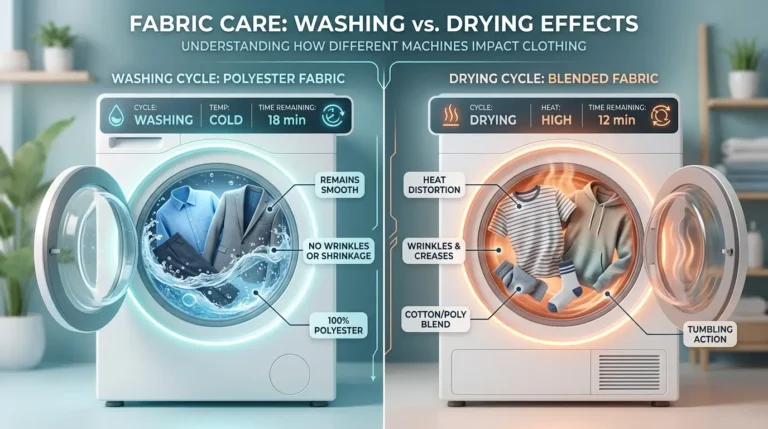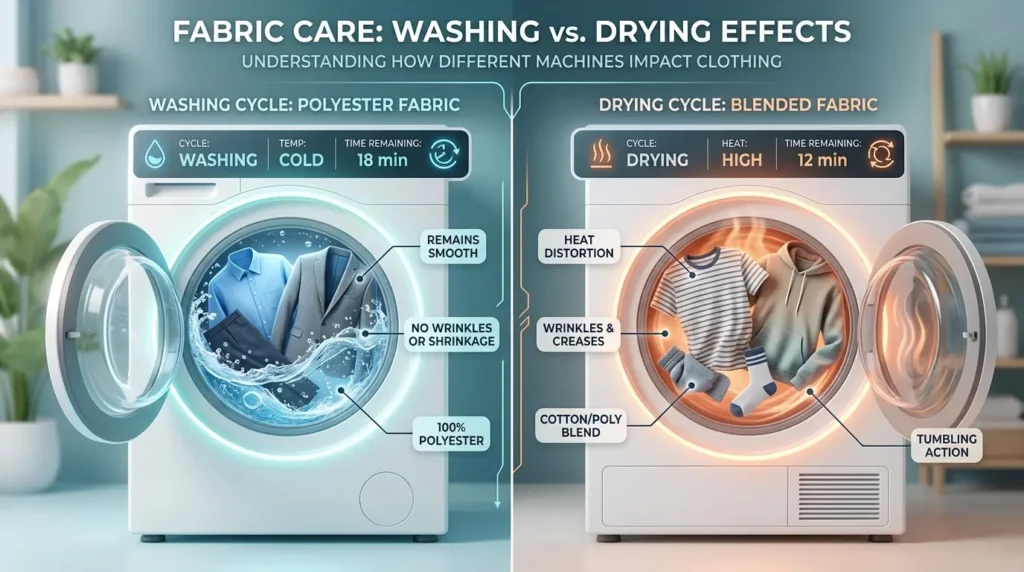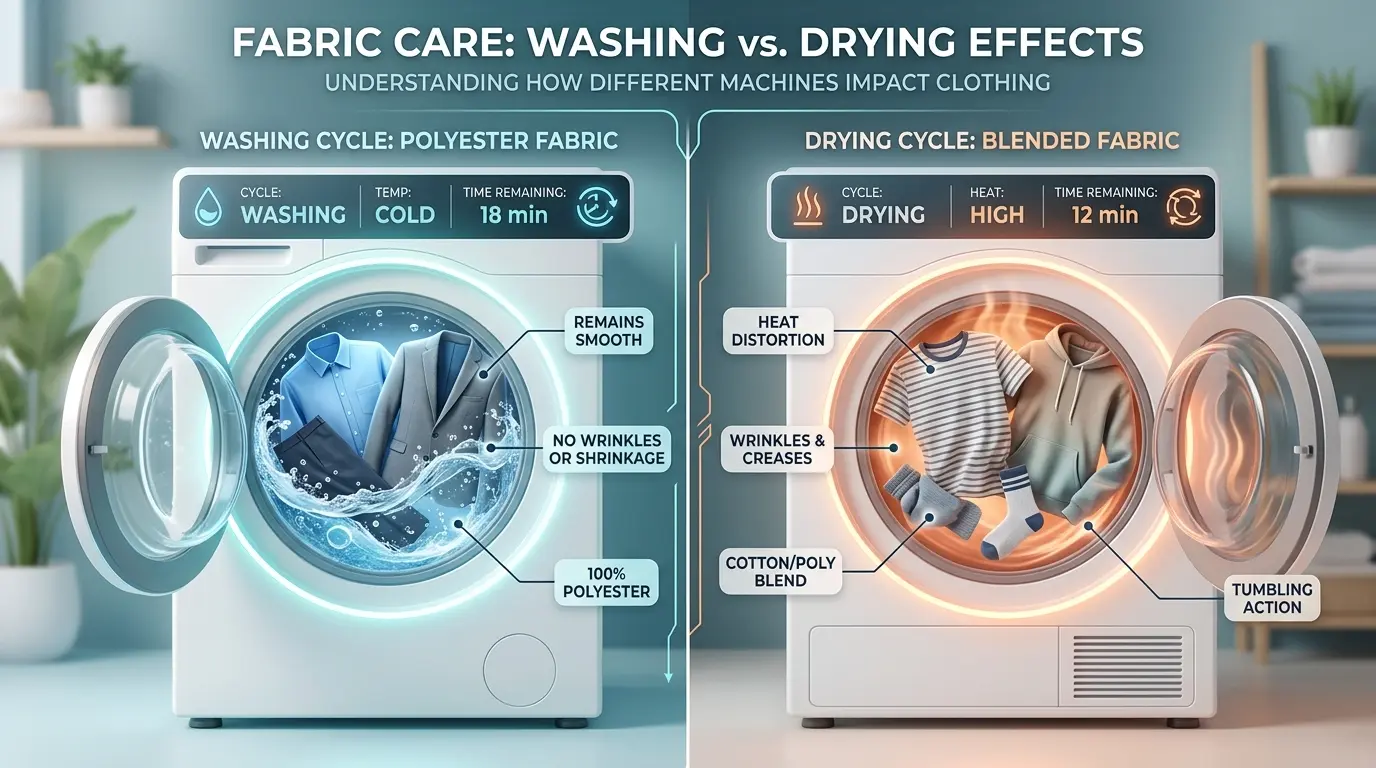
Pure polyester rarely shrinks under normal washing conditions because the fibers are designed to remain stable during everyday washing and drying.
However, excessive heat, blended fabrics, and lower fabric quality can slightly affect the material’s shape or texture over time.
What Is Polyester and Why Does It Resist Shrinkage?
Polyester is a synthetic fiber made from petroleum-based polymer chains called polyethylene terephthalate (PET). Unlike cotton or wool, polyester does not absorb much moisture into the fibers.
During manufacturing, polyester is heat-set into a fixed structure. This process locks the fibers into shape, helping the fabric maintain its original size after repeated washing and drying cycles.
Because polyester is thermoplastic, extreme heat can still affect it. Heat was originally used to shape the fibers, so excessive temperatures later can slightly reshape or damage the material.
Does 100% Polyester Shrink?
No, not under normal laundry conditions.100% polyester is considered one of the most shrink-resistant fabrics available for clothing, sportswear, and household textiles.
Cold and warm water washes are generally completely safe for polyester garments. Even hot water usually causes only minimal tightening rather than dramatic shrinkage.
Low and medium dryer heat settings are also safe in most situations, while high heat may cause very slight contraction or texture damage.
If a polyester garment feels smaller after washing, the issue is often caused by heat compression, wrinkling, or slight stiffness rather than true shrinkage.
Does Polyester Shrink in the Washer?
No, washing alone usually does not shrink polyester fabrics.Polyester is hydrophobic, meaning the fibers repel water instead of absorbing it deeply like cotton fibers do.
Since the fibers do not swell during washing, cold and warm water cycles are generally very safe for maintaining the garment’s original size. Even hotter wash cycles mostly affect the fabric texture rather than causing major dimensional changes.
Repeated exposure to extremely hot water may slowly reduce softness or slightly stiffen lower-quality polyester fabrics over time.
Does Polyester Shrink in the Dryer?
This is where most polyester damage usually happens.Dryers combine high heat, friction, and rapid moisture removal, which can place stress on synthetic fibers.
Polyester naturally dries very quickly, so high dryer heat is usually unnecessary. Low heat or air drying is normally enough to dry the garment safely and efficiently.
Repeated overheating can slightly tighten the fibers and may also make the fabric feel rougher, stiffer, or less smooth. High heat settings create the greatest risk for minor shrinkage, permanent deformation, or surface texture damage.
Does Polyester Shrink in Hot Water?
Hot water alone rarely causes major shrinkage in polyester fabrics.However, combining hot water with aggressive washing cycles and immediate high-heat drying can slightly weaken the polymer structure over time.
Polyester begins reacting more noticeably at temperatures above 60°C (140°F). That is why sanitize cycles and boiling temperatures create the highest level of risk. For long-term fabric care, keeping wash temperatures between 30–40°C (86–104°F) is usually the safest approach.
Does Polyester Shrink More Than Cotton?
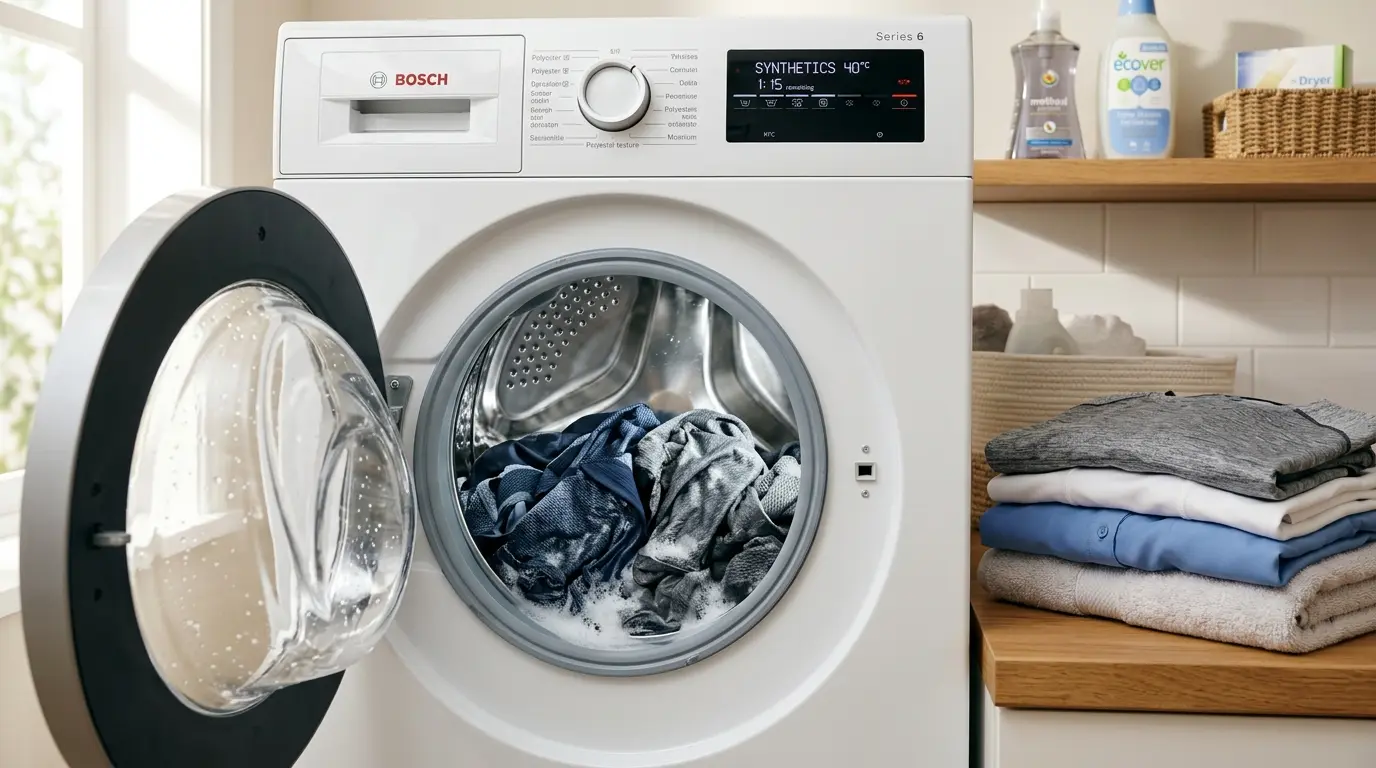
No, cotton shrinks much more than polyester.Cotton fibers absorb moisture deeply and naturally contract under heat, while polyester fibers remain far more stable under the same conditions.
Wool typically experiences the highest shrinkage risk, followed by cotton, rayon, and linen. Polyester and nylon remain among the most dimensionally stable fabrics used in modern clothing. This stability is one of the main reasons polyester is widely used in sportswear, uniforms, and work clothing.
Does Cotton Polyester Blend Shrink?
Yes, but blended fabrics behave differently from pure cotton garments.When heat is applied, the cotton portion of the fabric tends to shrink while the polyester portion resists movement.
This creates uneven tension throughout the garment, which may make the clothing feel slightly distorted or tighter in some areas.The higher the cotton percentage, the greater the overall shrinkage risk becomes.
Does 60 Cotton 40 Polyester Shrink?
Yes, more than lower-cotton blends.Since cotton makes up most of the fabric composition, the material behaves much closer to cotton than pure polyester.
Moderate shrinkage can occur if the garment is repeatedly exposed to hot water or high dryer temperatures. Cold washing and low-heat drying are strongly recommended to help maintain the original fit and shape.
Does 50 Cotton 50 Polyester Shrink?
Yes, but only moderately under normal conditions.The 50/50 cotton-polyester blend is designed to balance softness, breathability, durability, and shrink resistance.
Compared to 100% cotton garments, shrinkage is much lower and easier to manage over time. With proper care, these blended fabrics usually remain stable for years with only minimal size changes.
Does Polyester Spandex Shrink?
Not in the traditional sense. Spandex is more heat-sensitive than polyester, so excessive temperatures usually damage elasticity instead of causing true shrinkage. When exposed to high heat repeatedly, the elastic fibers gradually lose their ability to stretch back into shape.
This often causes leggings, activewear, swimwear, and compression garments to feel loose or baggy over time.Air drying or very low heat drying is the safest option for polyester-spandex blends.
Does Polyester Fleece Shrink?
Slightly, but texture damage is more common than actual shrinkage.Polyester fleece contains a soft piled surface that reacts differently to heat compared to smooth polyester fabrics.
High dryer temperatures can flatten the fibers and make the material feel stiff, rough, or matted. Cold washing combined with low heat or air drying helps preserve softness and reduces pilling.
Does Recycled Polyester Shrink?
No more than regular polyester.Recycled polyester, often called rPET, has almost the same molecular structure as virgin polyester fibers.
Because the fabric is still heat-set during production, it remains highly resistant to shrinkage under normal laundry conditions. Choosing recycled polyester generally does not reduce durability or long-term dimensional stability.
How Much Does Polyester Shrink?
Under normal conditions, pure polyester usually experiences little to no noticeable shrinkage. Blended fabrics shrink more depending on how much cotton or other natural fibers are included in the material.
High heat exposure can slightly increase shrinkage, especially in cotton-heavy blends that are repeatedly washed and dried aggressively. Compared to cotton, polyester remains one of the most stable and low-maintenance fabric options available.
Can You Shrink Polyester on Purpose?
Yes, but the results are usually inconsistent and difficult to control. Most people attempt to shrink polyester by washing it in very hot water and immediately drying it on high heat. Repeating the process may create slight contraction, although the results are rarely even across the garment.
Excessive heat can also permanently stiffen the material or damage the surface texture.In polyester-spandex blends, heat is more likely to destroy elasticity than create proper shrinkage.
How to Wash Polyester Without Shrinking It
Polyester is easy to care for when basic washing rules are followed consistently. Cold or warm water combined with a gentle or normal wash cycle is usually enough for everyday cleaning. Turning garments inside out before washing helps reduce surface friction, fading, and pilling during the cycle.
Low heat tumble drying works well because polyester dries quickly even without extreme temperatures.Air drying remains the safest method for preserving both shape and texture long term.
What Are the Downsides of 100% Polyester?
Polyester’s strong shrink resistance comes with a few disadvantages. Since the fibers repel moisture, polyester can trap heat and feel less breathable than natural fabrics like cotton. Synthetic fibers also tend to hold odors more easily and may generate static electricity during dry conditions.
Environmental concerns are another issue because polyester is non-biodegradable and can release microplastics during washing. Some people also find polyester less soft and natural-feeling compared to cotton or bamboo fabrics.
Final Verdict
Polyester is one of the most shrink-resistant fabrics used in modern clothing and textiles. Under normal laundry conditions, noticeable shrinkage is extremely rare and usually limited to slight tightening caused by excessive heat. Cold or warm washing combined with low heat drying helps polyester maintain its original size and shape for years.
Most shrinkage concerns only appear when garments are exposed to repeated high temperatures or contain large amounts of cotton. Following the care label instructions is usually enough to keep polyester clothing looking and fitting properly long term.
FAQs
Does polyester shrink in cold water?
No. Cold water is completely safe for all polyester and polyester-blend fabrics. It will not cause any shrinkage.
Does polyester shrink in the washing machine?
Not under normal settings. The washing machine only poses a risk if you use extremely hot water cycles (Sanitize/Heavy Duty), and even then, shrinkage is minimal compared to cotton.
Does polyester shrink in the dryer?
Rarely, but high heat settings are the biggest risk factor for polyester. Use low heat or air dry to be safe.
Does 100% polyester run big or small?
Polyester typically runs true to size. Because it has limited natural stretch, a slim-fit polyester garment may feel snug, but it has not actually shrunk.
How long does it take for polyester to shrink?
Polyester doesn’t shrink gradually over time any change happens instantly during a heat exposure event (one hot dryer cycle, one hot wash).
Does polyester stretch out over time?
Slightly, especially in knit structures. Polyester alone has limited stretch; blends with spandex offer more give. Overuse and heat can cause spandex blends to lose elasticity.
Can you put polyester in the dryer?
Yes polyester is dryer-safe. Use low or medium heat settings. High heat is the only setting that poses any risk.
Do polyester pills?
Yes, especially in areas of friction (underarms, collar, cuffs). Turning garments inside out before washing reduces pilling.
Does recycled polyester shrink differently?
No. Recycled polyester (rPET) behaves the same as virgin polyester: same heat-set structure, same shrink resistance.
What is the safest way to dry polyester?
Air drying on a hanger is the safest method. Polyester dries quickly and holds its shape perfectly without any heat.