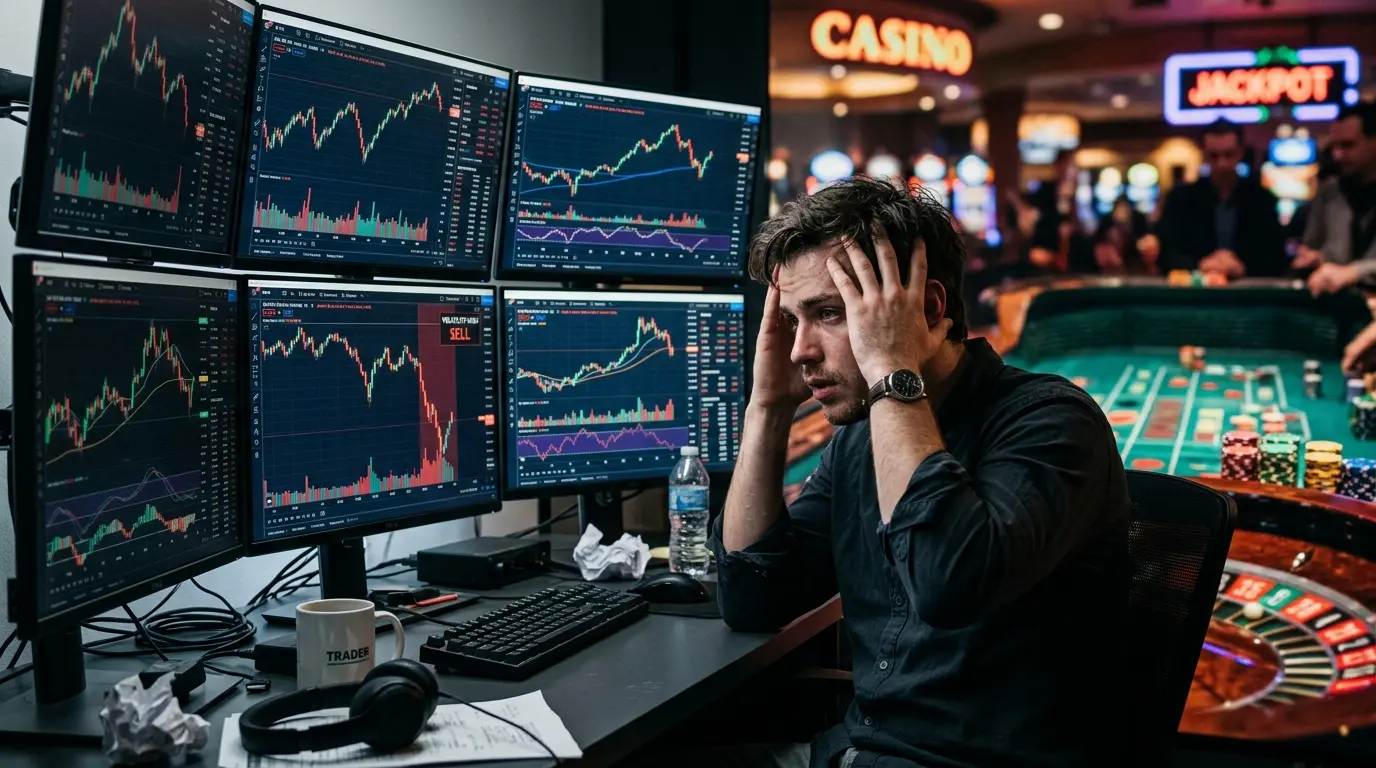
Your family probably said it. Your friends definitely said it. “You’re just gambling with your money.” And honestly? They might be half right. Not because intraday trading is gambling by definition. But because most people who do it ,treat it exactly like one.
This article breaks down the real difference. You will get data, psychology, Islamic finance perspective, and a clear framework to know which side of the line your trading falls on.
What Is Intraday Trading Really?
Intraday trading means you buy and sell a stock, currency, or derivative within the same trading day. You open a position. You close it before the market shuts. No overnight risk.
That’s it. Simple in theory.
But in practice, it demands fast decisions, emotional control, real time data reading, and a system that actually works. Traders use tools like candlestick charts, volume indicators, moving averages, and news feeds to decide when to enter and exit. The pressure is real. Prices move within seconds. And losses can stack up fast. This speed and uncertainty is exactly why people compare it to gambling. But speed alone doesn’t make something gambling.
What Is Gambling Really?
Gambling is placing money on an outcome driven primarily by chance where the structure of the game is designed to give the house a permanent mathematical edge.
Think roulette. Think slot machines. Think a coin toss.
Three things define gambling
Chance controls the outcome
skill has little or no impact
The house always wins long-term
the expected value is structurally negative for you
You cannot improve the odds
through study or strategy
Poker is a partial exception skilled players can win consistently. But even there, the rake (the house’s cut) creates a negative expected value unless your edge is significant.
The key phrase is: negative expected value by design.
In a casino, no matter how smart you are, the math is against you. That is gambling.
Is Intraday Trading Gambling? The Core Answer
Short answer: It depends on how you trade not the activity itself.
Here is the clearest way to think about it
Intraday trading IS gambling when you
- Enter trades based on tips, WhatsApp forwards, or gut feel
- Have no defined exit rule before entering a trade
- Risk random amounts per trade sometimes 2%, sometimes 20%
- Chase losses by doubling down
- Have never back tested a single strategy
- Do not track your win rate, average win, or average loss
Intraday trading is NOT gambling when you
- Use a rule based system with defined entry and exit criteria
- Calculate your expected value (positive expectancy)
- Risk a fixed, small percentage of capital per trade (e.g., 1%)
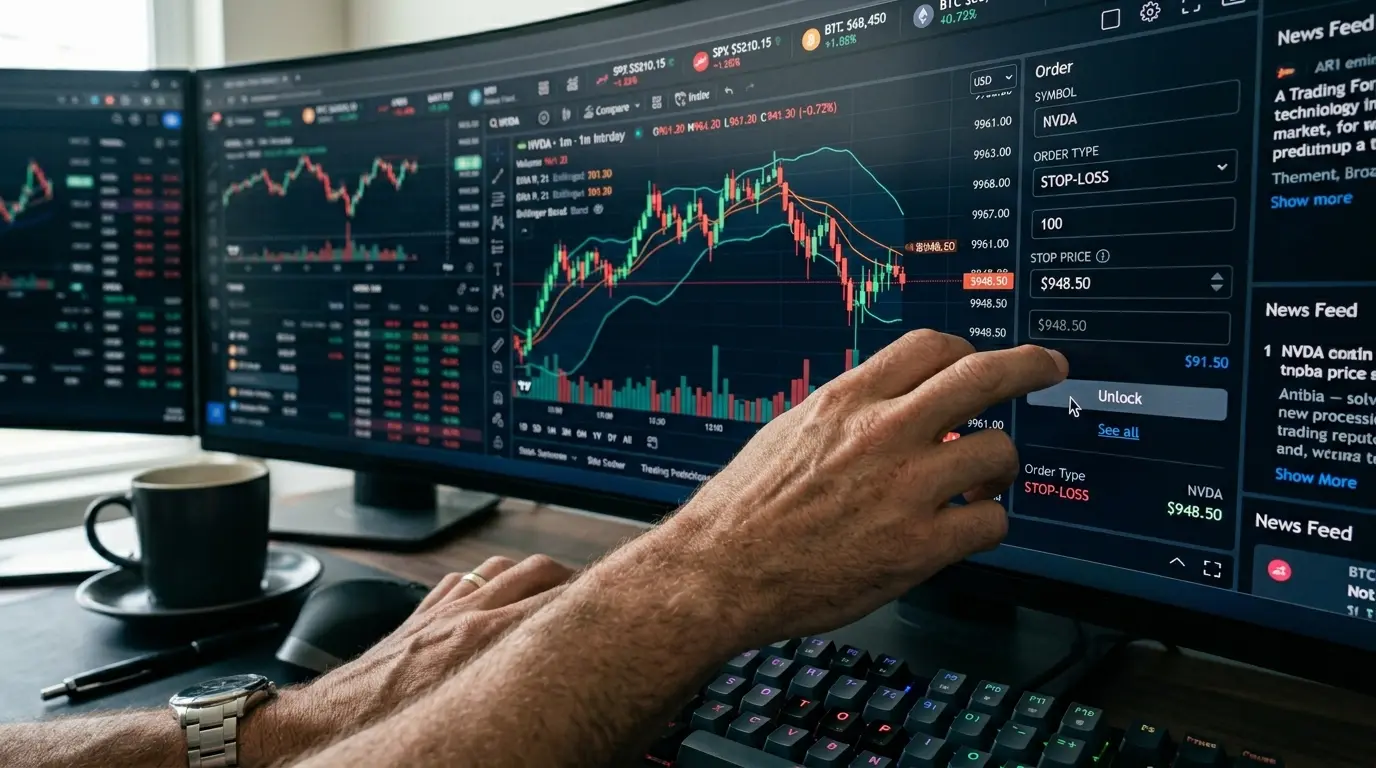
- Use stop-loss orders on every trade
- Have back tested your strategy over 50+ trades
- Treat each trade as one data point in a larger system
The difference is not the asset. It is not the time frame. It is whether you have a measurable, tested edge or whether you are relying on luck and emotion.
Why Intraday Trading Feels Like Gambling?
Even structured trading feels like gambling sometimes. Here is why.
The dopamine response is identical
Winning a trade triggers the same dopamine release as winning at a slot machine. Your brain does not distinguish between the two. This is why trading can become addictive regardless of whether it is skill-based or not.
Losses create an urge to recover
When you lose money in trading, the emotional pull to “win it back” is powerful. This is called loss aversion a well-documented cognitive bias. Gamblers feel the exact same thing. Traders who act on this feeling start making emotional, unplanned trades. That is when structured trading slides into gambling.
Random outcomes create false patterns
The human brain finds patterns in everything even pure randomness. A trader who wins three trades in a row may believe they have found a system. They have not. They found a coincidence. Acting on false patterns without data is gambling, even if it looks like strategy.
The market provides constant stimulation
Markets move every second. Prices blink. Notifications ping. This constant stimulus keeps traders hooked just like casino floor sounds are designed to do. Without discipline, the stimulation drives more trades, more risk, and less thinking.
The Data ,What Happens When You Trade Without a System?
The numbers are not pretty.
- Over 90% of retail intraday traders in India lose money, according to SEBI’s own studies on derivative trading.
- Traders who made more than 500 trades per year saw their odds of loss increase with frequency.
- Brokerage fees and transaction costs deepen losses further especially for high-frequency retail traders.
- Studies from Brazil found that only 1.1% of day traders were consistently profitable over a two-year period.
These statistics do not prove that intraday trading is gambling. They prove that trading without edge is gambling.
When researchers applied a rule-based system to real Indian market data across 560 trades, with defined entries, stop-losses, and targets the result was a positive expected value with a 37.5% win rate. The system was profitable even though it lost more trades than it won.
That result is impossible in gambling. You cannot beat a casino with a 37.5% win rate. In structured trading, you can because you control the reward to risk ratio.
“According to Investopedia, successful intraday trading depends heavily on risk management, discipline, and having a tested trading strategy.”
Gambling vs. Structured Trading Side-by-Side Comparison
| Factor | Gambling | Structured Intraday Trading |
| Outcome driven by | Chance | Skill + system + data |
| Expected value | Negative (house edge) | Positive (if edge exists) |
| Can you improve over time? | No | Yes through back testing and review |
| Risk control | None you lose the full bet | Stop-loss limits your downside |
| Win rate needed to profit | More than 50% | Can be as low as 37% with good R:R |
| Role of emotion | Central | A liability to be managed |
| Data matters? | No | Completely |
| Regulation | Gaming commission | SEBI, SEC, FCA |
The single most important insight in that table: a 37% win rate can be profitable in trading. In gambling, a 37% win rate means guaranteed long term loss. That mathematical gap is the fundamental difference between the two activities.
Is Intraday Trading Halal or Haram?
This is one of the most searched related questions and the answer is genuinely nuanced.
Islamic finance prohibits three things that can appear in trading:
- Riba : interest or excessive profit without real value exchange
- Gharar : excessive uncertainty or unclear contracts
- Maysir : speculation that resembles gambling
Most Islamic scholars agree that intraday trading can be halal but only when specific conditions are met.
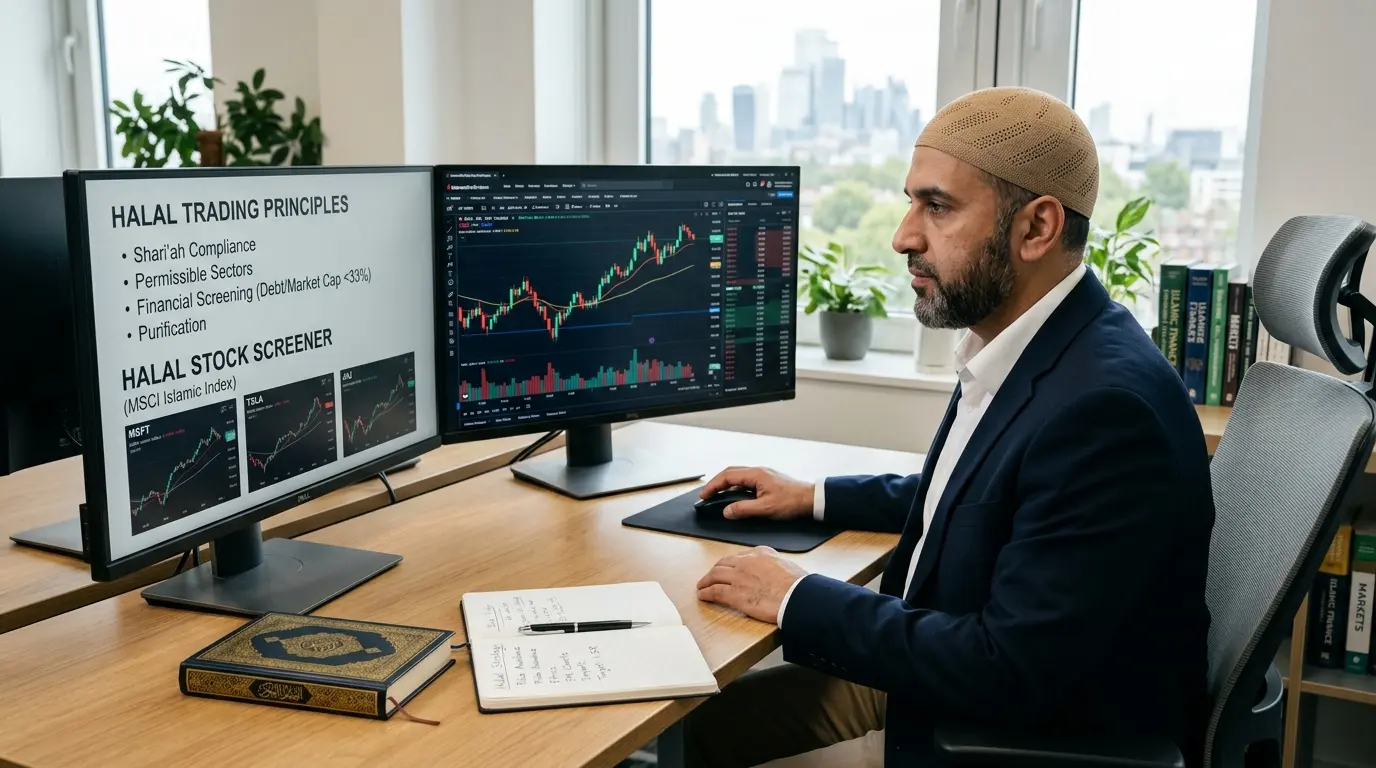
Conditions That Make Intraday Trading Halal
Full ownership before selling
You must genuinely own the asset before selling it. The T+1 settlement cycle in most stock markets complicates this for pure intraday trades, which is why some scholars consider it haram.
No leverage or interest based margin
Using borrowed money with interest charges introduces riba.
No short-selling
Selling something you do not own is not permitted.
Halal underlying assets
The company or instrument being traded must comply with Shariah — no alcohol, gambling, or interest-based businesses.
Intention
Trading to generate legitimate income through skill is different from pure speculation.
What Scholars Say
A 2024 review of Islamic finance perspectives found that over 70% of scholars now support intraday trading as halal when it follows core Shariah principles clear ownership, full transparency, and no riba.
The Islamic Fiqh Academy (MWL, 2006) permits spot transactions but warns against leverage and deferred settlement.
So the answer to “Can Muslims do intraday trading?” is: yes, with conditions. Consult a qualified Islamic scholar for your specific situation.
Which Type of Trading Is NOT Gambling?
Great question and a practical one.
The further you move from pure speculation, the further you move from gambling. Here is a spectrum:
Long-Term Investing (Least like gambling)
Buying shares of fundamentally strong companies and holding them for years. Based on business analysis, earnings growth, and economic trends. Time is on your side. Warren Buffett’s approach.
Swing Trading (Moderate)
Holding positions for days or weeks based on technical and fundamental analysis. Less emotional pressure than intraday. More time to think. Still requires a real system.
Intraday Trading with a System (Requires discipline)
Rule based, back tested, with defined stops and targets. Can be a legitimate skill based activity. High failure rate without proper training.
Options Scalping Without a System (Closest to gambling)
Entering and exiting options positions within minutes based on gut feel or tips. High leverage. High speed. Low analysis. This is where intraday trading most closely resembles gambling.
The type of trading that is NOT gambling is any approach that has a testable, measurable, positive expected value regardless of time frame.
5 Habits That Turn Trading Into Gambling (And How to Stop)
1.Trading on Tips
The habit: Acting on a Telegram signal, YouTube call, or WhatsApp forward without verifying the logic.
Why it is gambling: You have no idea if the source has an edge. You are outsourcing your risk to someone else’s guess.
Fix: Only take trades you understand and can explain. If you cannot write down your entry reason in one sentence, do not enter.
2. No Stop-Loss
The habit: Entering trades without a predefined exit for losing trades. Holding and hoping.
Why it is gambling: Without a stop loss, your downside is unlimited. One bad trade can wipe out weeks of gains.
Fix: Set a stop-loss before entering every trade. Make it a rule without exceptions.
3. Chasing Losses
The habit: After a losing trade, immediately taking a bigger position to “win it back.”
Why it is gambling: This is the martingale strategy a classic gambling fallacy. Losses compound, not cancel.
Fix: Walk away after two consecutive losses. Return with a clear head. No trade is worth destroying your capital.
4. No Position Sizing
The habit: Risking different amounts each time sometimes small, sometimes everything.
Why it is gambling: Without consistent position sizing, even a profitable system destroys accounts through variance.
Fix: Risk a fixed 1% of capital per trade. This protects you through losing streaks while keeping gains intact.
5. No Record-Keeping
The habit: Never tracking trades, win rate, or performance.
Why it is gambling: You cannot improve what you do not measure. Without records, you are flying blind.
Fix: Log every trade: entry, exit, reason, result. Review weekly. Patterns emerge both good and bad.
Expert Tips (How Real Traders Build an Edge)
These are the habits that separate the 1% who survive from the 99% who quit.
Backtest before you risk real money:
Run your strategy on at least 100 historical trades. If it does not work in the past, it will not work in real time.
Calculate your expectancy:
Expectancy = (Win rate × Average win) − (Loss rate × Average loss). If this number is positive, you have an edge. If negative, you do not.
Trade less, not more:
Frequency is the enemy of returns for retail traders. Fewer, higher-quality setups outperform constant activity.
Study your losing trades:
Profitable traders learn more from losses than wins. Review every stopped-out trade. Find the pattern.
Paper trade first:
Before risking real capital, trade on a simulator for 60 days. Build the habit of discipline without the emotional cost.
Separate trading capital from living money:
Only trade with money you can afford to lose completely. Desperation leads to gambling.
Conclusion
So, is intraday trading gambling?
Here is the honest answer: for most people who do it today, yes. Not because the activity is inherently gambling, but because they approach it without a system, without risk control, and without data.
But intraday trading does not have to be gambling. When you build a back tested strategy, define your risk on every trade, track your results, and manage your emotions you cross the line from speculation into a skill-based activity with a real edge.
The market does not reward luck over time. It rewards discipline, preparation, and consistency.
If you want to know which side of the line your trading falls on, answer one question: Can you calculate your strategy’s expected value from past trade data?
If yes you are trading. If no you are gambling .Share this article if it helped you think more clearly about trading. And drop a comment below do you think intraday trading is gambling? We want to hear your take.
For more informative guides on AI, trading, technology, and online earning topics, keep visiting AiBlogsWorld.
FAQS
Is intraday trading like gambling?
It can be but it does not have to be. When traders use emotional decisions, no system, and no risk control, the outcome is statistically identical to gambling. When traders use back tested systems with defined risk, it becomes a skill-based activity with a measurable edge.
Why do 90% of intraday traders lose money?
Most retail traders enter without proper education, trade based on emotions, use excessive leverage, and have no risk management. These are gambling behaviors applied to a financial instrument. The market rewards discipline and punishes impulse consistently.
Can day trading make you rich?
It can generate real income for skilled, disciplined traders. But it is not a fast path to wealth. Sustainable day trading takes 1–3 years of serious study, practice, and record-keeping before consistent profitability becomes realistic.
Is day trading a gamble?
Day trading without a system is functionally gambling. Day trading with a back tested, rule-based system and proper risk management is a skill-based activity. The activity is the same the approach determines which category it falls into.
Which trading is not gambling?
Long-term investing in fundamentally sound companies is least like gambling. Any trading approach intraday or otherwise that has a tested positive expectancy, consistent position sizing, and emotional discipline is not gambling by meaningful definition.
Is intraday trading halal?
It can be halal if the trader avoids interest-based margin, trades halal assets, takes genuine ownership, and avoids excessive speculation. Scholars differ on the T+1 ownership issue. Consult a qualified Islamic finance expert for guidance specific to your situation.